Key Takeaways
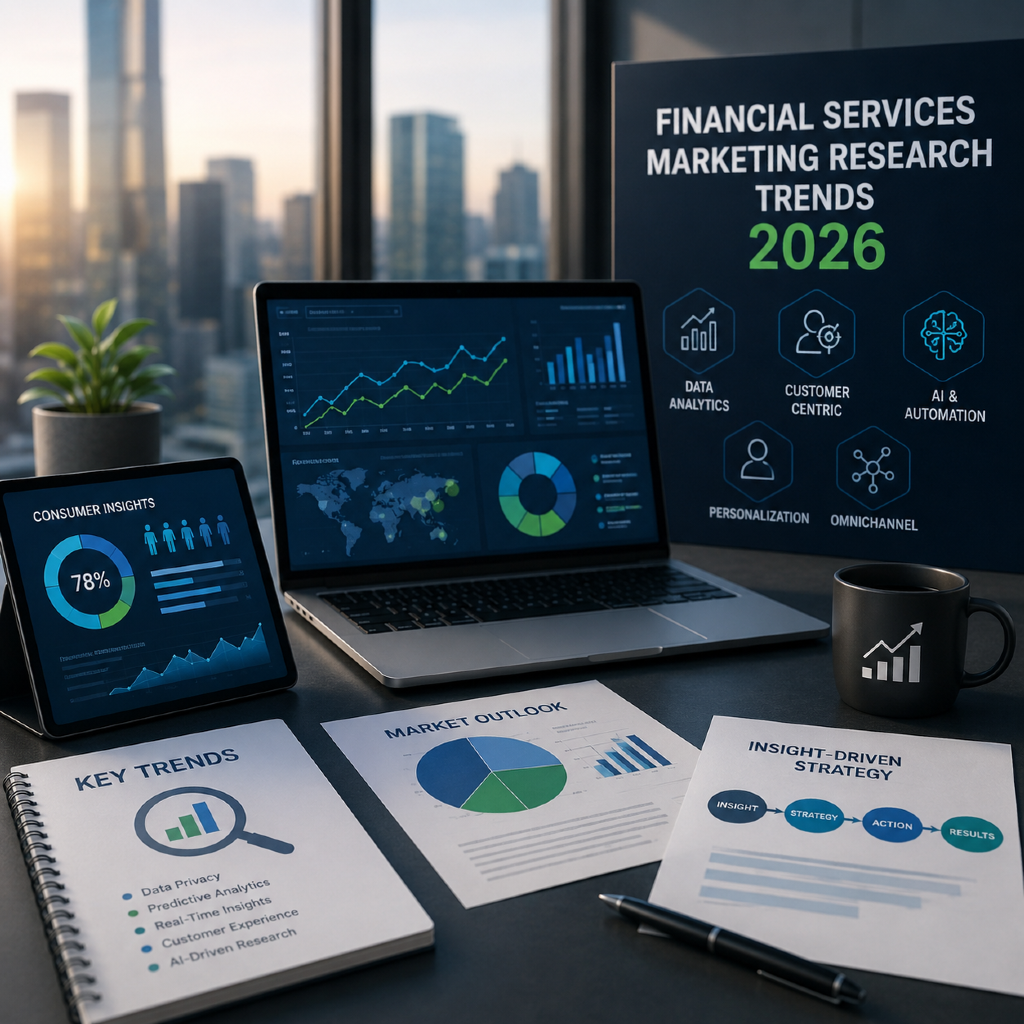
- Data-driven strategies are transforming marketing research, empowering financial professionals to deliver more client-centric and credible solutions.
- Adopting predictive analytics, omnichannel insights, and adaptive content marketing is crucial for staying relevant in the 2026 financial services landscape.
Staying ahead in the fast-evolving financial services sector requires a keen understanding of how marketing research is changing. As data-driven strategies take center stage in 2026, financial professionals must navigate new opportunities and address fresh challenges. Here’s what you need to know to position your business for credibility and growth.
What Are Financial Services Marketing Research Trends?
Defining Data-Driven Strategies
In today’s market, data-driven strategies refer to the practice of grounding decisions in measurable insights. This approach means shifting away from gut feelings and anecdotal evidence, and instead using quantifiable data to understand markets, inform marketing campaigns, and enhance service value. For financial professionals, this creates new ways to identify high-value clients, tailor communications, and evaluate market response with confidence.
Evolution of Marketing Research
Marketing research in financial services has evolved dramatically. Traditional surveys and focus groups have given way to real-time analytics and advanced modeling. New research methodologies—driven by the explosion of digital data—are enabling you to gain granular insights into customer behavior, preferences, and emerging needs. This evolution empowers service-based professionals to deliver more relevant, strategic communications and to adapt quickly to changing market dynamics.
Why Is Data Central for 2026?
Growing Importance of Analytics
Analytics have become an indispensable part of marketing research strategies. In 2026, they’re not just a competitive advantage—they’re a basic requirement. Analytics platforms sift through vast datasets to reveal actionable patterns in client engagement, operational performance, and campaign effectiveness. By leveraging these tools, you’re able to uncover market trends, optimize your outreach, and allocate resources where they matter most.
Links to Credibility and Client Trust
Data-driven insights build trust with clients. In financial services, credibility is everything—your clients expect you to back up your recommendations with transparent evidence. Research powered by solid datasets demonstrates a commitment to accuracy and ethical practice, which in turn strengthens relationships. As a financial professional, showing that your initiatives are informed by trusted data instills greater confidence in your value and advice.
Key Data-Driven Trends to Watch
Predictive Analytics and Personalization
Predictive analytics uses historical and real-time data to forecast future client needs and behaviors. For financial professionals, this means being able to anticipate decision points such as investment interests or service upgrades. Personalization—driven by these analytics—enables you to craft communications, offers, and solutions tailored to each client’s unique profile, improving engagement and positioning your practice as responsive and forward-thinking.
Omnichannel Client Insights
Omnichannel research integrates data from every client touchpoint, whether digital, in-person, or by phone. With clients expecting seamless, consistent brand experiences across channels, unified insights are essential. Understanding cross-platform interactions helps financial professionals identify where clients engage most, shapes consistent messaging, and pinpoints areas for service improvement.
Content Marketing Adaptations
Content marketing remains a pillar of client acquisition and retention. In 2026, the trend is toward content that’s guided by client data—responding to specific financial questions, needs, and digital behaviors. Adaptive content strategies, informed by ongoing research, enable you to deploy articles, whitepapers, and videos that speak directly to your audience’s evolving interests, positioning your expertise and value clearly in each interaction.
How Can Professionals Leverage These Trends?
Actionable Research Approaches
To take full advantage of data-driven trends, consider integrating ongoing research processes into daily operations. Use client feedback loops, periodic surveys, website analytics, and social listening to collect continuous data. This practice can uncover unmet client needs, guide new service development, and enhance marketing strategy. Evaluating which data points matter most to your particular audience will keep research actionable and relevant.
Building Sustainable Marketing Systems
Sustainability in marketing means establishing repeatable, reliable processes. By constructing systems that regularly gather, analyze, and apply market intelligence, you foster ongoing growth without overwhelming internal resources. Automating non-sensitive research tasks and building a culture of data curiosity among your team will help maintain momentum and support scalability as your business grows.
What Challenges Could Arise?
Ethical and Compliance Considerations
Handling client data responsibly is critical. With expanded data collection comes heightened attention to privacy, cyber-security, and regulatory compliance. As a financial professional, you must ensure all research activities adhere to applicable laws and ethical standards. This might include securing informed client consent, storing and transmitting data securely, and staying informed about current regulations that govern data use in your sector.
Data Quality and Interpretation Issues
Not all data is equally useful. Challenges can arise when datasets are incomplete, outdated, or gathered from unreliable sources. Misinterpreting research findings can also lead to flawed decision-making. Committing to data integrity—by cleaning datasets regularly and applying rigorous review protocols—can help avoid pitfalls and ensure research supports sound business strategies.
Less Discussed Research Opportunities
Behavioral Data Applications
Going beyond traditional demographics, behavioral data examines how clients actually interact with your digital assets or communications. Tracking click paths, content engagement, and even time spent on financial calculators can reveal motivations or obstacles. This information empowers you to optimize client journeys, address pain points, and ultimately enhance client satisfaction.
Emerging Metrics Beyond Conversions
While conversions remain important, modern research delves into new metrics: client lifetime value, engagement scores, and satisfaction ratings. These alternative measurements provide richer context and reflect long-term success. By paying close attention to emerging metrics, you position your practice to nurture relationships, deepen loyalty, and adapt to evolving client expectations in a rapidly changing market.