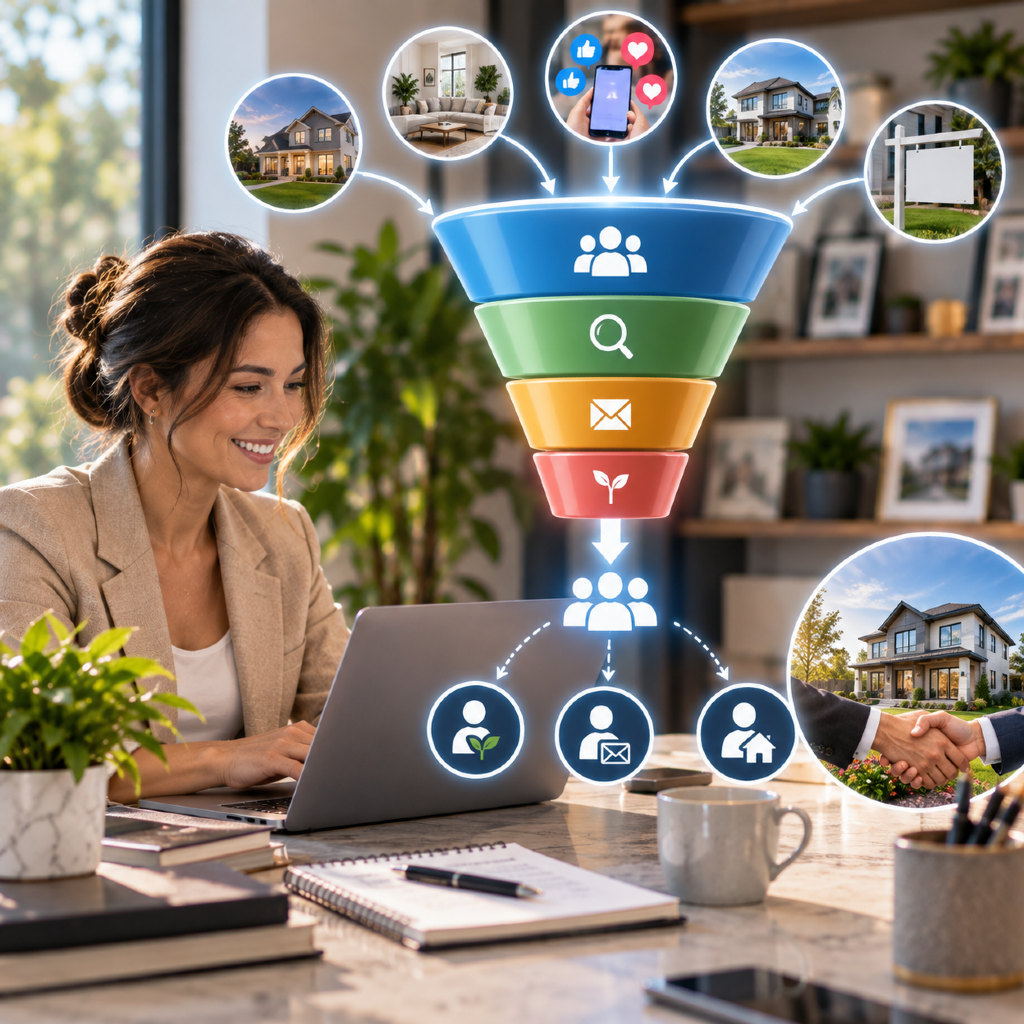
Key Takeaways
- A structured real estate marketing funnel streamlines lead generation, engagement, and client conversion.
- Continuous lead nurturing and consistent communication enhance trust and improve your long-term results.
A well-designed real estate marketing funnel is the foundation of strategic lead generation, relationship building, and sustained business growth. By understanding each funnel stage and employing tailored strategies, you can confidently guide prospects from first contact to lasting client relationships.
What Is a Real Estate Marketing Funnel?
The concept of a marketing funnel shapes the way you attract, qualify, and convert potential clients into happy property owners or sellers. In real estate, mastering the funnel means creating a clear path for nurturing leads and supporting them through their decision journey.
Understanding Funnel Stages
Real estate marketing funnels typically follow a sequence: Awareness, Interest, Decision, and Action. Each stage corresponds to a different phase in the buyer’s or seller’s journey. At the start, people become aware of your brand or services. As they progress, their interest grows, decisions are made, and, ultimately, action is taken—such as scheduling a showing or signing a listing agreement.
Why Funnels Matter for Agents
A structured funnel helps you organize your communication, target your audience more precisely, and avoid missed opportunities. By aligning your marketing strategy with funnel stages, you ensure each prospect receives relevant information and feels supported, helping to foster lasting client-agent relationships.
What You’ll Need to Get Started
Preparation is key to building an effective marketing funnel. Review your available resources, assemble your team, and identify the essential assets you’ll need for each funnel stage.
Essential Content Assets
To support each funnel stage, you’ll need:
- Informative blog articles or market guides for awareness
- Email templates or nurturing sequences for ongoing engagement
- Property listings, neighborhood profiles, and testimonials for decision support
- Post-transaction follow-up materials, such as satisfaction surveys or referral request emails, for continued connection
These assets should reflect your expertise and answer common questions your prospects have throughout their journey.
Team and Resources Considerations
Consider your support network. Are your marketing and sales teams coordinated? Identify whether you’ll need content creators, administrative support, or digital strategists to execute each stage effectively. Consistent messaging and responsive service enhance both prospect experience and conversion rates.
How Do Funnel Stages Work?
Understanding how each funnel stage operates enables you to match your tactics to your prospect’s intentions.
Awareness: Attracting New Leads
At this entry point, your goal is to generate interest among people considering real estate transactions but not yet committed to an agent. Digital advertising, local SEO, social media, and community involvement are effective tools for increasing visibility and attracting new leads.
Interest: Keeping Prospects Engaged
Once you’ve captured attention, provide value with educational content, personalized communication, and property recommendations that address common pain points or aspirations. The right engagement at this stage builds trust and helps prospects see you as a valuable resource.
Decision: Moving Toward Conversion
During this phase, prospects compare options and move closer to selecting a real estate professional. Sharing client stories, virtual tours, neighborhood market data, and clear explanations of your service process helps prospects feel confident about choosing to work with you.
Action: Closing and Beyond
Here, prospects transition to clients as they take clear, measurable steps—like signing a contract or closing on a property. Don’t let the relationship end here; thoughtful follow-up encourages repeat business and referrals, sustaining your growth well beyond the initial transaction.
Strategies for Each Funnel Stage
Matching your marketing efforts to the unique needs of each stage enhances results and fosters lasting relationships.
Top-of-Funnel Techniques
Focus on brand visibility and audience education at the entrance to your funnel. Strategies include:
- Sharing expert advice, tips, or market updates via social channels and blog posts
- Offering downloadable neighborhood guides or checklists
- Hosting virtual open houses or webinars addressing local trends
These methods introduce you to new audiences and signal your expertise.
Middle-of-Funnel Methods
With attention secured, nurture relationships through:
- Segmented email campaigns offering tailored content
- Sending relevant listings based on buyer or seller profiles
- Sharing case studies or insights from previous clients
Personalization is key here—it reminds prospects that you understand their unique needs.
Bottom-of-Funnel Approaches
At this critical conversion point, instill confidence and reduce barriers:
- Providing easy scheduling options for calls, meetings, or tours
- Sharing clear explanations of your buying or selling process
- Offering satisfaction check-ins and readiness to address last-minute questions
Proactive, reassuring communication can make the difference between winning and losing the client.
How Can You Nurture Real Estate Leads?
Lead nurturing transforms initial interest into loyal, long-term partnerships. Focused, personalized efforts keep you top-of-mind as prospects navigate their decision-making process.
Leveraging Content for Trust
Consistently offering value—whether through newsletters, market updates, or educational blog posts—positions you as a trusted advisor. Content that answers questions or demystifies parts of the sales process builds credibility, helping clients feel informed and secure.
Effective Follow-Up Approaches
Strong follow-up practices might include:
- Timely responses to inquiries
- Setting automated reminders to check in at key intervals
- Personal notes or check-ins after site visits, open houses, or completed transactions
These small efforts have a significant impact in demonstrating reliability and maintaining momentum.
Common Pitfalls in Funnel Building
Even experienced professionals can encounter obstacles when constructing or managing funnels. Awareness of common mistakes helps you avoid unnecessary setbacks.
Gaps in Messaging
Inconsistencies or unanswered questions at any stage can confuse prospects and slow progress. Ensure that each communication builds on the previous step, with clear calls to action guiding your audience smoothly from one stage to the next.
Neglecting Lead Follow-Up
Failing to follow up promptly and personally can quickly erode trust. Make follow-up a routine priority, and use tools or calendar reminders to systematize your outreach, so no lead is overlooked or forgotten.