Key Takeaways
- Digital reputation plays a decisive role in how clients perceive your real estate practice.
- Compliance-focused credibility strategies can build lasting trust and protect your professional brand.
How you market your credibility as a realtor has never been more important. As home buyers and sellers increasingly vet agents online before ever making contact, a strong, compliance-aware digital reputation can distinguish you in a crowded field. Explore exactly how you can build trust, maintain compliance, and enhance your professional brand in 2026.
What Is Realtor Credibility Marketing?
Core Principles of Credibility
Realtor credibility marketing centers on intentionally communicating your trustworthiness, expertise, and ethical standards to your target market. It’s more than just sharing your experience or achievements—you are actively demonstrating transparency, reliability, and a commitment to client needs.
Key principles include:
- Transparency: Clearly disclose information, avoid overstating results, and provide realistic expectations.
- Consistency: Maintain the same high standards across all platforms, from your website to social profiles to client interactions.
- Expertise: Share insights based on your experience, show a deep understanding of the real estate market, and highlight your problem-solving approach.
- Authenticity: Be relatable and genuine in your messaging so that clients feel confident and comfortable reaching out.
Role in Client Trust
Effective credibility marketing plays a foundational role in gaining client trust. Buyers and sellers want to work with professionals known for their integrity and excellent service. When you consistently communicate a credible image, you give prospective clients confidence that you can guide them through important transactions with care and professionalism. Credibility isn’t self-proclaimed; it’s earned through every touchpoint, review, and interaction—both online and offline.
Why Does Digital Reputation Matter?
Impact on Prospective Clients
Your digital reputation is often the very first touchpoint for prospective clients. Before responding to mailers, picking up the phone, or booking an appointment, most clients will research your name online. They read reviews, scan your social profiles, and compare your messaging to other realtors.
A positive online presence increases trust, while a poorly managed or inconsistent one can raise doubt—even if your in-person performance is stellar. Today, digital reputation isn’t just a “nice to have.” It’s a deciding factor in whether clients reach out or keep looking.
Examples of Digital First Impressions
First impressions happen fast online. For example:
- A Google search yields glowing client reviews on your professional page and complete, up-to-date listings on your website.
- Social media profiles highlight expertise and engagement—without controversy, outdated info, or mismatched branding.
- Your responses to public feedback show professionalism, empathy, and a commitment to client satisfaction.
Each of these touchpoints can either reinforce your credibility or detract from it. Consistency across digital channels is essential.
How Can Realtors Ensure Compliance?
Common Compliance Considerations
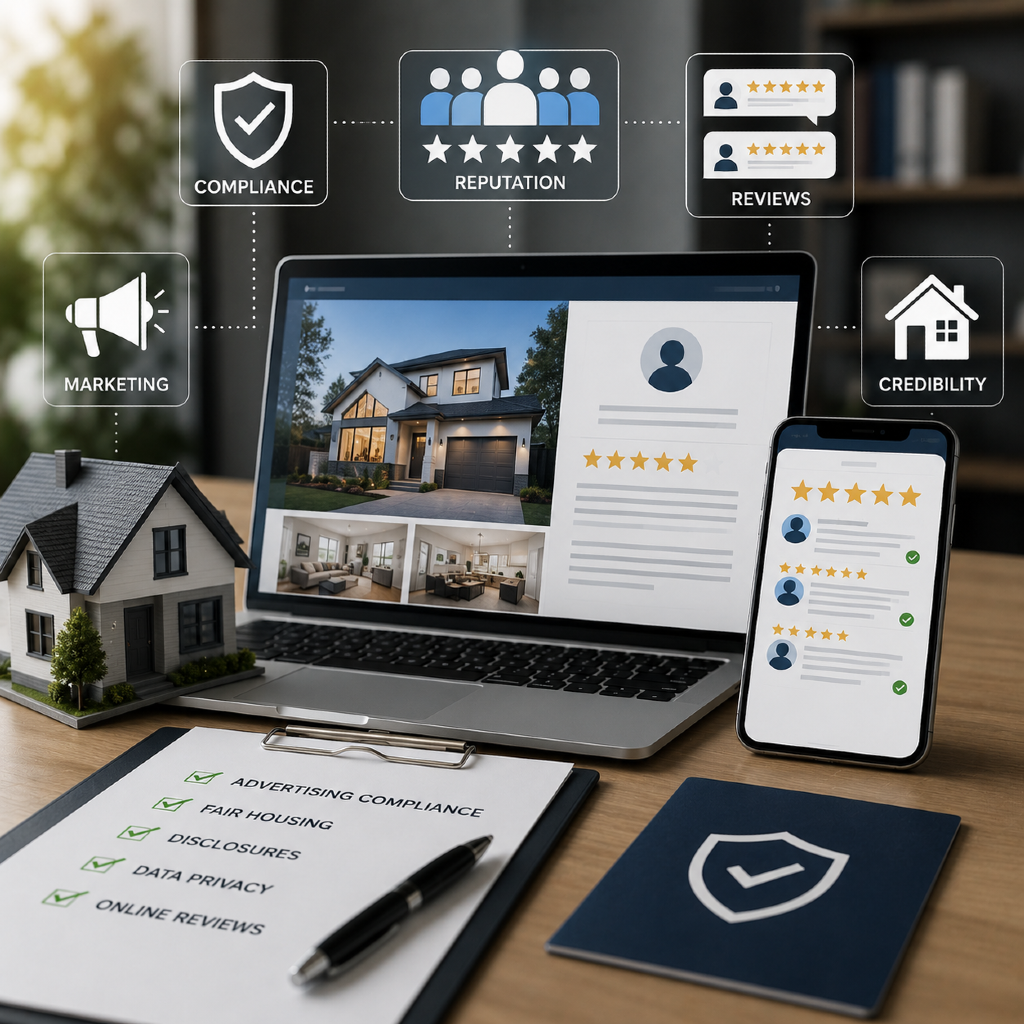
Compliance in real estate marketing helps protect both you and your clients while promoting ethical standards in the industry. Common considerations include:
- Accurate Advertising: Avoid misrepresenting property details, services, or professional credentials in all promotional materials.
- Fair Housing Standards: Represent properties and services in a way that upholds equal opportunity for all prospective clients.
- Disclosure Requirements: Clearly state any affiliations or legal disclosures required by your licensing body or association.
- Confidentiality: Never share client information or photos online without explicit consent.
Regularly review your online content and communications to ensure you stay aligned with evolving regulations. Consulting official guidance from your professional association or board helps ensure your marketing practices remain compliant.
Ethical Marketing Practices
Ethical marketing goes hand-in-hand with compliance. It includes:
- Being truthful about your track record and not exaggerating results or testimonials.
- Using authentic, unaltered client reviews and avoiding soliciting only positive feedback.
- Disclosing any potential conflicts of interest upfront.
- Giving credit where it’s due—always credit third-party content or co-listed properties as appropriate.
Remember: Marketing ethically safeguards your brand and contributes to a culture of trust in real estate.
Strategies for Building Online Trust
Content Authenticity and Accuracy
Your digital content should reflect who you are as a professional. Here’s how to ensure authenticity and accuracy:
- Regularly update listings and profiles with current information.
- Share real market insights and actionable tips for buyers and sellers.
- Highlight case studies or stories that illustrate your process and client focus (within confidentiality guidelines).
- Fact-check every claim or statement you make online.
Authentic content resonates more with potential clients and supports your credibility far more than generic, sales-heavy posts.
Encouraging Organic Client Reviews
Genuine client reviews are a cornerstone of digital reputation. To encourage more clients to share their feedback:
- Make the process easy—send a polite, non-incentivized request following a successful closing.
- Outline where and how they can leave a review (e.g., your website or a recognized third-party platform).
- Always thank clients who take the time to review your services.
Avoid pressuring clients for positive reviews or offering incentives, as this can create compliance risks and undermine trust.
What Are the Risks of Poor Digital Reputation?
Potential Client Impact
A negative or poorly managed online reputation can significantly impact client acquisition and retention. Common consequences include:
- Loss of trust, even if only one or two negative reviews exist without responses or context.
- Reduced referrals as past clients hesitate to recommend someone whose reputation seems in question.
- Difficulty standing out in increasingly competitive marketplaces where reputation serves as a key differentiator.
Damage Control Approaches
If you encounter negative feedback online:
- Respond swiftly but thoughtfully, acknowledging the concern and outlining any steps taken to resolve the issue.
- Avoid defensive or emotional responses, even if you feel the review isn’t fair.
- Where appropriate, move the conversation offline to protect privacy and resolve issues.
- Regularly monitor your digital properties so you’re never caught off guard by emerging concerns.
Proactive, professional responses can actually enhance your credibility in the eyes of prospective clients.
Practical Tips for Sustaining Credibility
Consistent Communication Practices
Sustained credibility is built on clear, reliable communication. You can reinforce your brand by:
- Keeping your messaging consistent across your website, listings, and social media.
- Following up promptly on client inquiries and providing thorough, honest answers to questions.
- Setting realistic expectations at the outset of every client relationship.
Responding to Feedback Professionally
Feedback—both positive and negative—is an opportunity. Respond to all reviews with gratitude and a constructive mindset. Address concerns with empathy and solutions. Professional responses show you care about your clients’ experiences and are committed to improvement, reinforcing your trustworthiness for future clients.
FAQ: Common Credibility Marketing Questions
Balancing Promotion and Compliance
It’s entirely possible—and recommended—to market your strengths while staying compliant. The key is to communicate your expertise and value through real achievements, authentic testimonials, and transparent practices, rather than overselling or making unsupported claims. Always align promotional materials with your industry’s ethical and regulatory standards.
Monitoring Digital Presence Effectively
Staying on top of your online presence is easier with routine monitoring:
- Schedule periodic reviews of your website, listings, and social media profiles for accuracy and relevance.
- Set up alerts for your name and business to track new reviews or mentions.
- Engage thoughtfully with both praise and criticism, demonstrating your ongoing commitment to professionalism.
By combining these approaches, you ensure your digital reputation continues to support your growth and professional integrity in 2026 and beyond.